



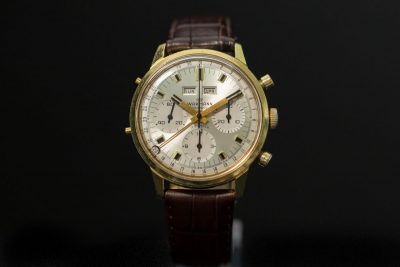
Wakmann Triple Date Chronograph
Let’s go back to the 1960s and 70s. In the USA, the Government decided to raise a tax on luxury goods such as high end watches. This covered a span of 3 decades between the 1940’s and the 1970’s.
In order to successfully sidestep a tax that would otherwise create a steep increase in the price of luxury watches, high end firms had to look at the letter, not the spirit of the law.
Breitling, a firm known for fashion, luxury and sports timepieces rivaling the quality offerings of firms such as Rolex, Philippe Patek et. al., made the bold and straight interpretation of the import law work in their favour. Another example was Wittnauer, which imported Longines watches into the United States. Purchasing the right to use the name of Wakmann, securing a facility in New York and using their staff to manage its operation, Breitling did not have to pay a tariff on imported luxury watches.
Instead, they shipped separate elements of their watches , such a movements and hands separate from dials and cases and put them together in New York.
American domestic customers of Breitling were sent brochures informing them of the company’s decision to expand their watch production in their new New York facility and were shown many of the identical (albeit with a different name on the dial) pieces offered in their international catalogues.
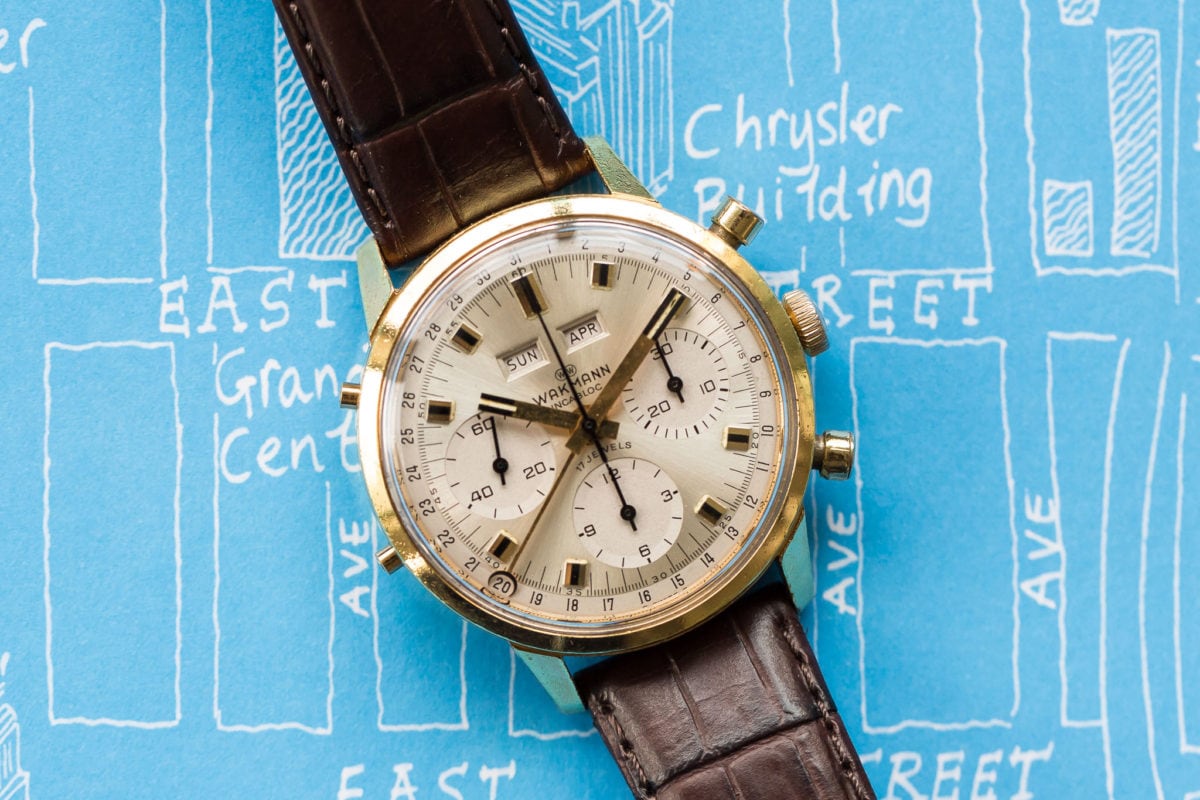
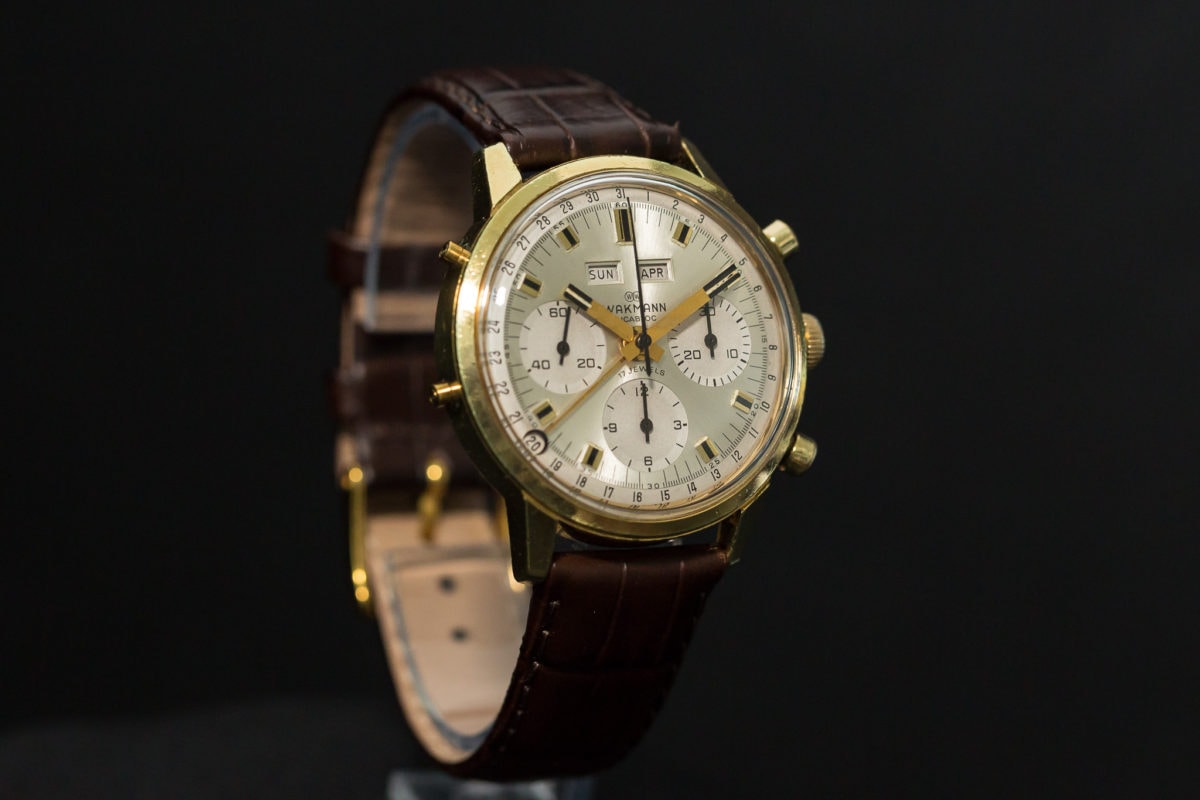
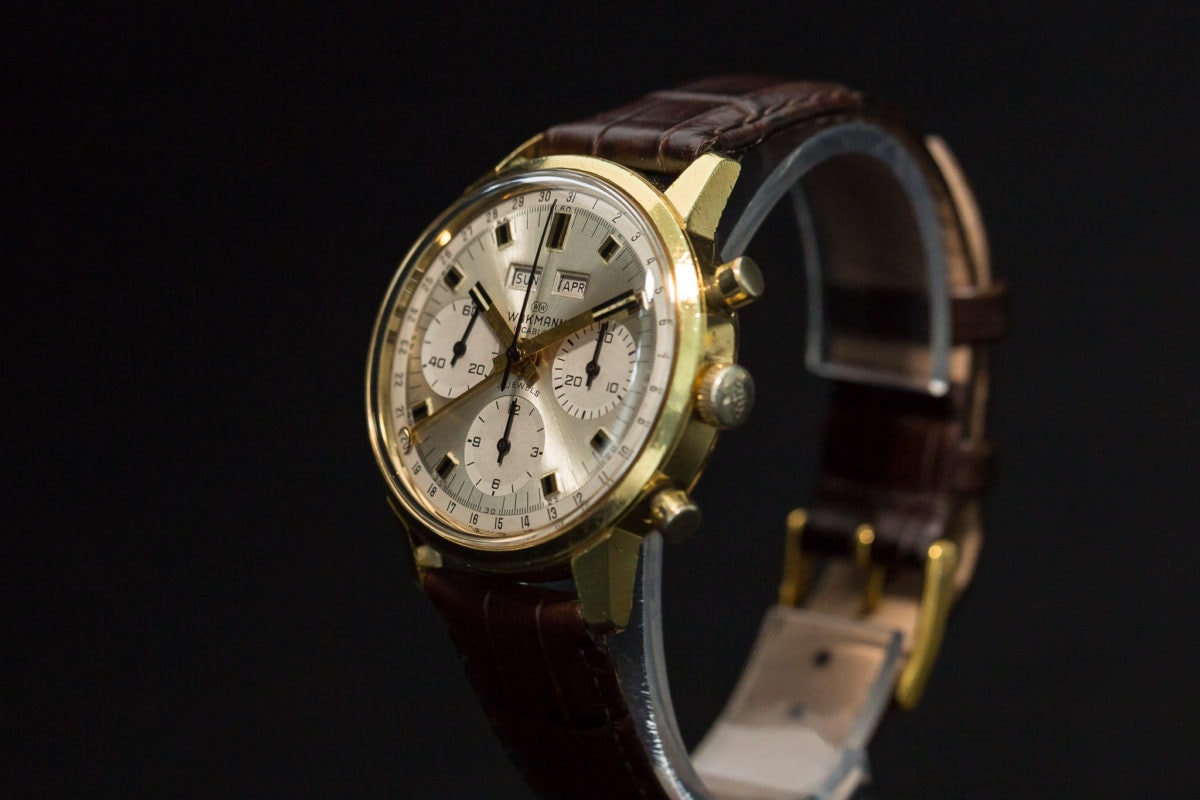
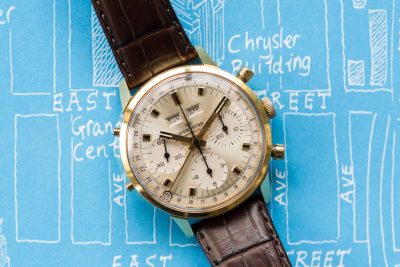
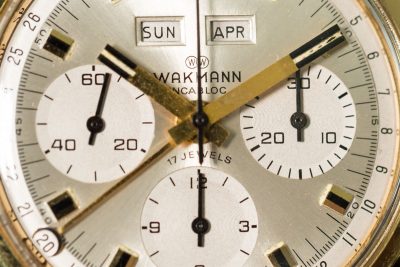
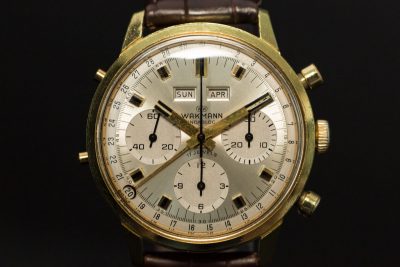
So, this is a (Breitling) Wakmann Triple Date Chronograph. A triple date? A good question because the name might suggest that that the watch shows three different dates or some other information. Actually, the watch is a standard, tri-compax layout chronograph with some fairly serious modifications to the movement to give you date information. And when it comes to date information, this is where the “triple” comes in as the watch shows the day, date and month. The day and month are shown within little windows below 12:00 while the date is indicated on the outer edge of the dial with the “crescent moon” shaped hand. The movement employed and how to set all these things are something I’ll cover shortly.
It shares the same case as the more prevalent, and well-known, Wakmann Triple Dates as well as Gigandet and even Jules Jurgensen. In fact, Gigandet actually made the watches and branded them for these other marques. Remember, the late 1960’s and 1970’s were wild and wooly times for Swiss watch companies and the sharing we so often discuss was running rampant.
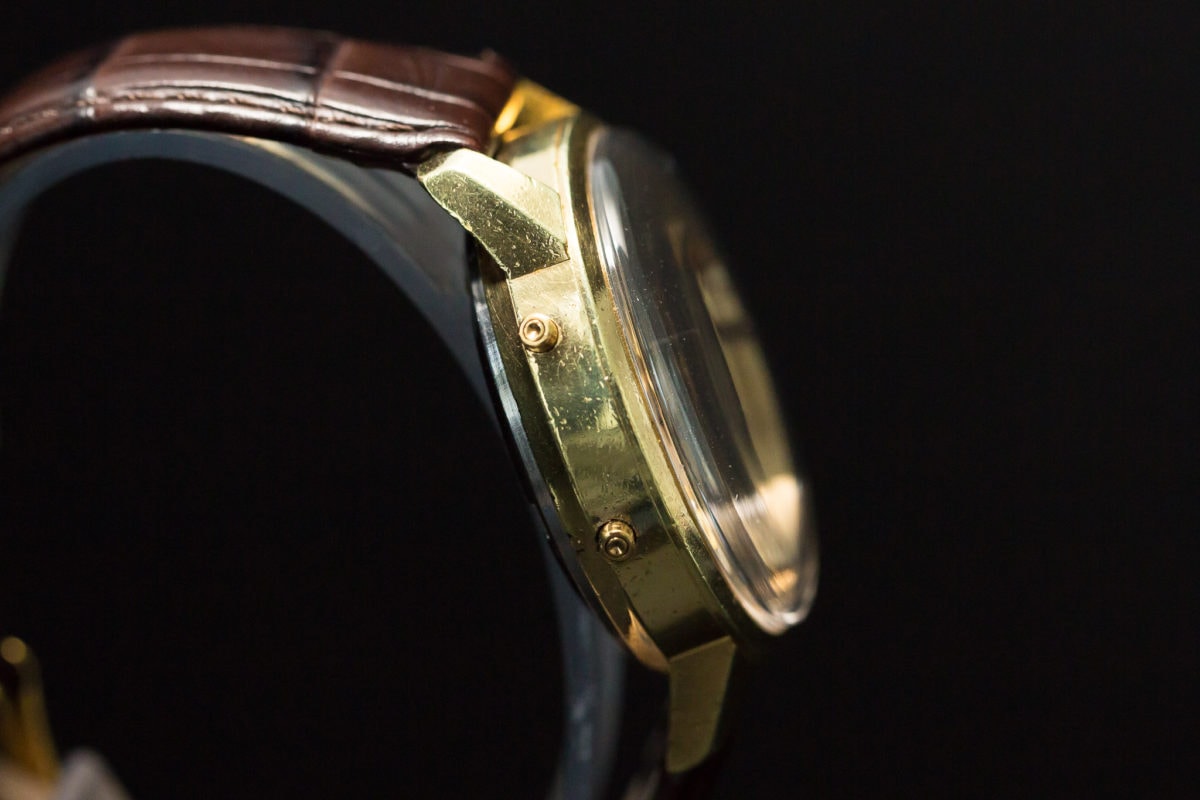
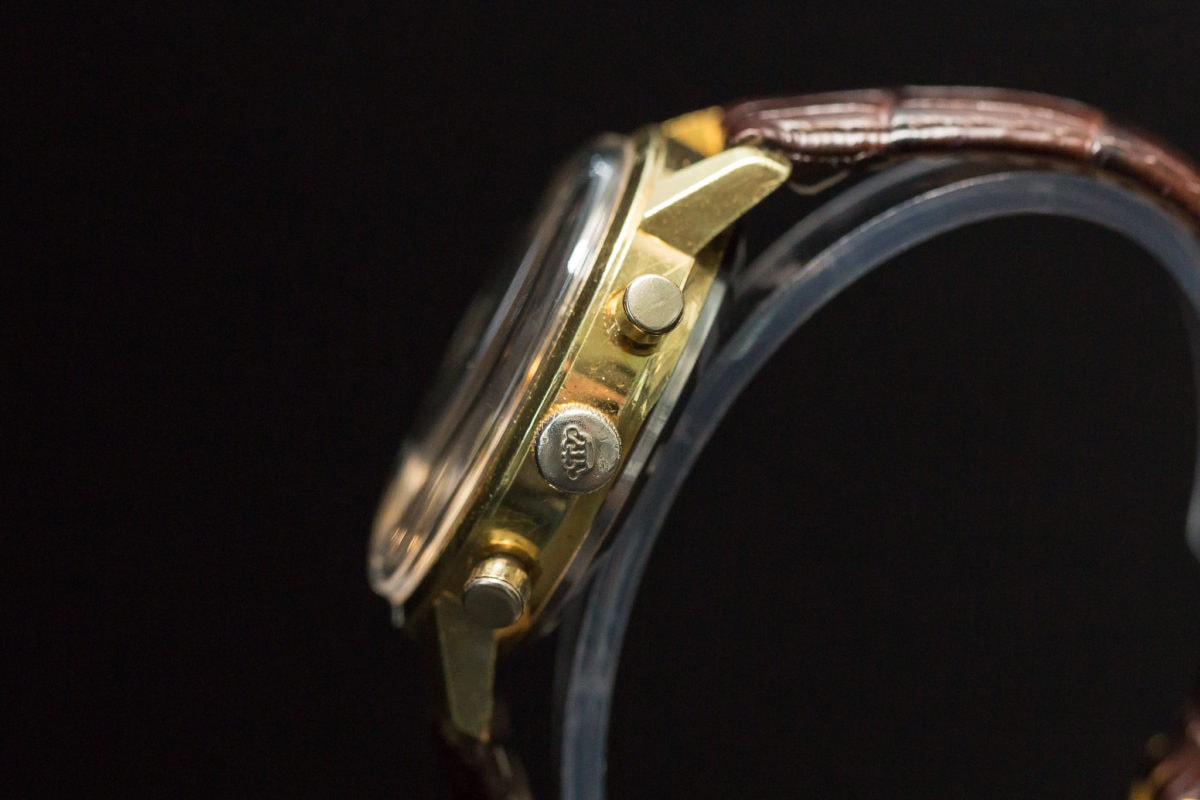
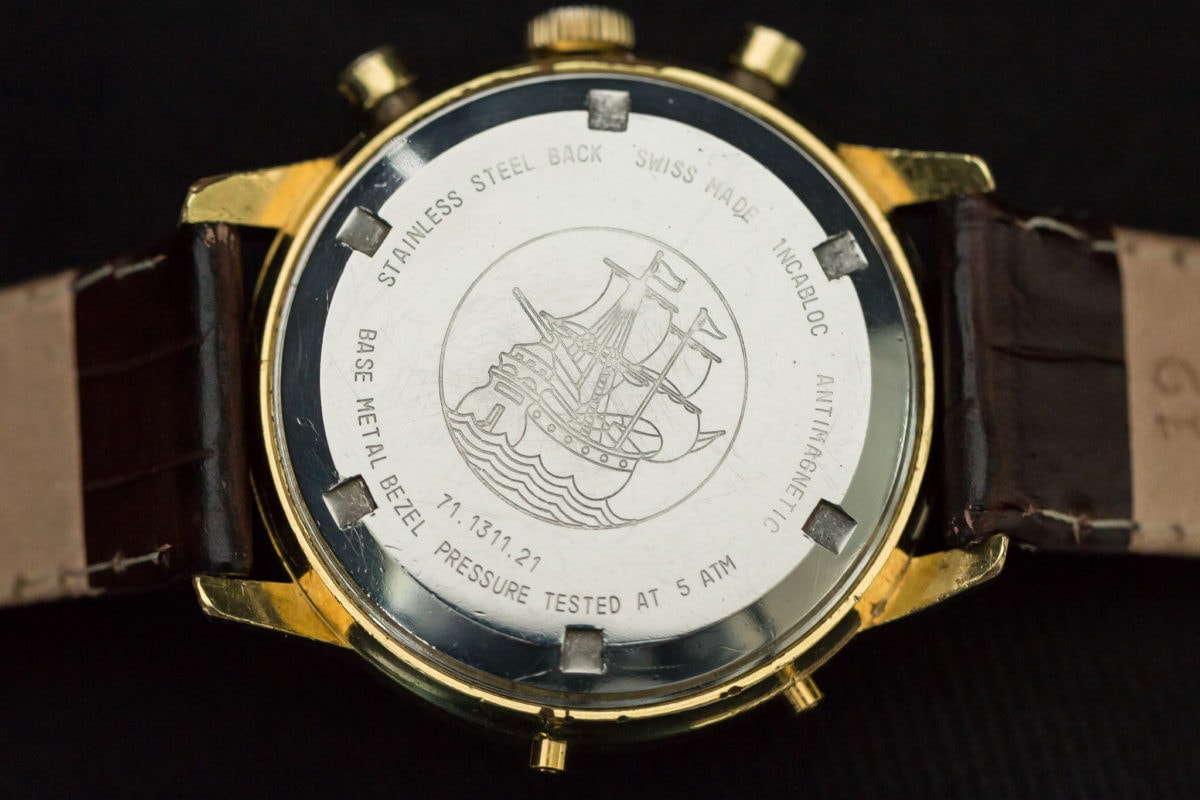
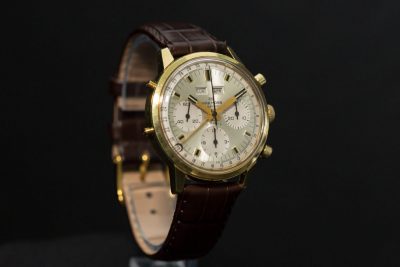
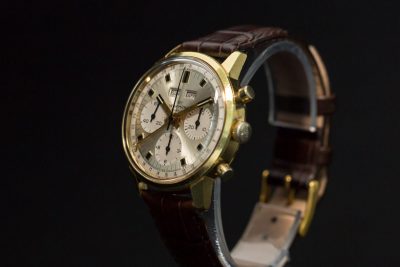
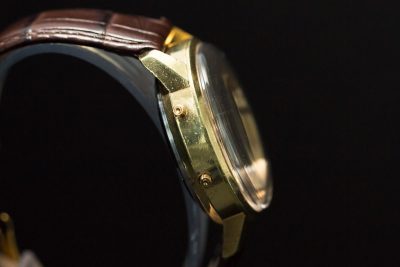
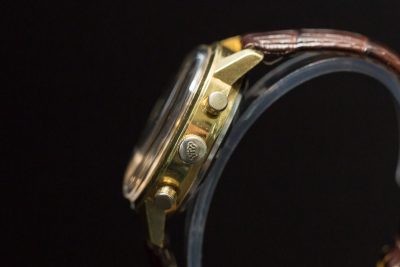
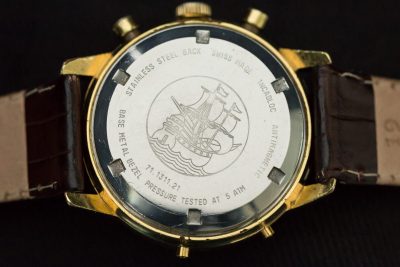
It has a well preserved gold plated original case measuring a 37mm. across; 13.5mm. thick including the crystal. The silver dial is original and with only small marks showing its age. The original gold coloured, baton hands are both distinctive and wide; with matching baton dial markers and black chrono hand. Functions include day/date/month/30 minute and 12 hour counters along with standard hours/minutes. Notice the polished pushers and large steel winding crown. The highly regarded and finely gilded Valjoux 730 manual winding movement is in good overall condition and is working well after a recent full service and clean.
Stainless steel is the go to material for many vintage watches, especially chronographs. That would make you think that gold is the ‘wrong’ colour or material. Less popular, but rarer therefore, such timepieces will always be in style. So, like this one, make sure you buy a very good example, because you may not be able to afford restoring a lesser one.